
Have you ever had a brilliant idea for a software app — something that could solve a real problem, save people time, or make life easier — but assumed it was out of reach because you don’t know how to code?
If that’s you, I have exciting news: that assumption is now officially outdated.
Thanks to the rise of no-code AI tools and the teaching methods of people like Helena Liu, founder of Product Camps, everyday entrepreneurs — including those of us who are 50 and beyond — are building real, functional AI-powered software apps without writing a single line of code.
In this post, I’m going to walk you through exactly how it’s done. By the time you finish reading, you’ll understand the mindset, the method, and the tools you need to go from idea to working AI app — no tech background required.
First, Let’s Talk About Why This Matters for YOU
If you’re part of the OnlineBusinessFor50.com community, you already know that age is not a barrier to building something extraordinary online. In fact, it’s often an advantage. You bring decades of life experience, industry knowledge, and real-world problem-solving skills that younger entrepreneurs simply don’t have yet.
Now imagine combining that wisdom with the power of AI.
You don’t need to start from scratch learning Python or JavaScript. You don’t need to hire a $10,000 developer. What you need is a clear idea, the right tools, and a proven method — and that’s exactly what Helena Liu has spent years refining.
Meet Helena Liu: The Woman Making AI Accessible for Everyone
Helena Liu is the founder and CEO of Product Camps, an education and implementation company focused on helping entrepreneurs and business owners harness the power of AI and automation — without needing a technical background.
Her story is an inspiring one. She started her first company, ExamsPM, from scratch — losing $5,000 in the first year and a half before eventually growing it into a 7-figure business. She did it by becoming self-sufficient: learning everything herself, from building websites to writing content to making graphics. Then, when COVID hit, she challenged herself again and launched Product Camps, focused entirely on making AI tools practical and accessible for regular business owners.
Today, she leads a community of over 100,000 professionals, has trained thousands of people to use AI in their businesses, and has been featured on Microsoft Learn as a trusted AI educator.
Her message is simple and powerful: You don’t need to be a tech person to use AI. You just need the right roadmap.
The Core Idea: AI Has Changed What’s Possible Without Code
A few years ago, building a software app meant hiring developers, writing complex code, and spending months (and thousands of dollars) just to get a prototype working.
That’s no longer the case.
Today, tools like Replit Agent, ChatGPT, Make (formerly Integromat), Zapier, and other no-code/low-code platforms allow you to describe what you want in plain English — and the AI does the technical heavy lifting for you.
Helena herself has used tools like Replit Agent and OpenAI to build custom AI-powered web apps for her business — and she teaches her students to do the same. One of her own creations, Whiteboards AI, is an AI writing tool that generates content in your brand’s voice. Another, ChatLemon, lets users build unlimited AI chatbots. Both were built by someone who focused on the strategy and the user experience — not the code.
That’s the future you’re stepping into.
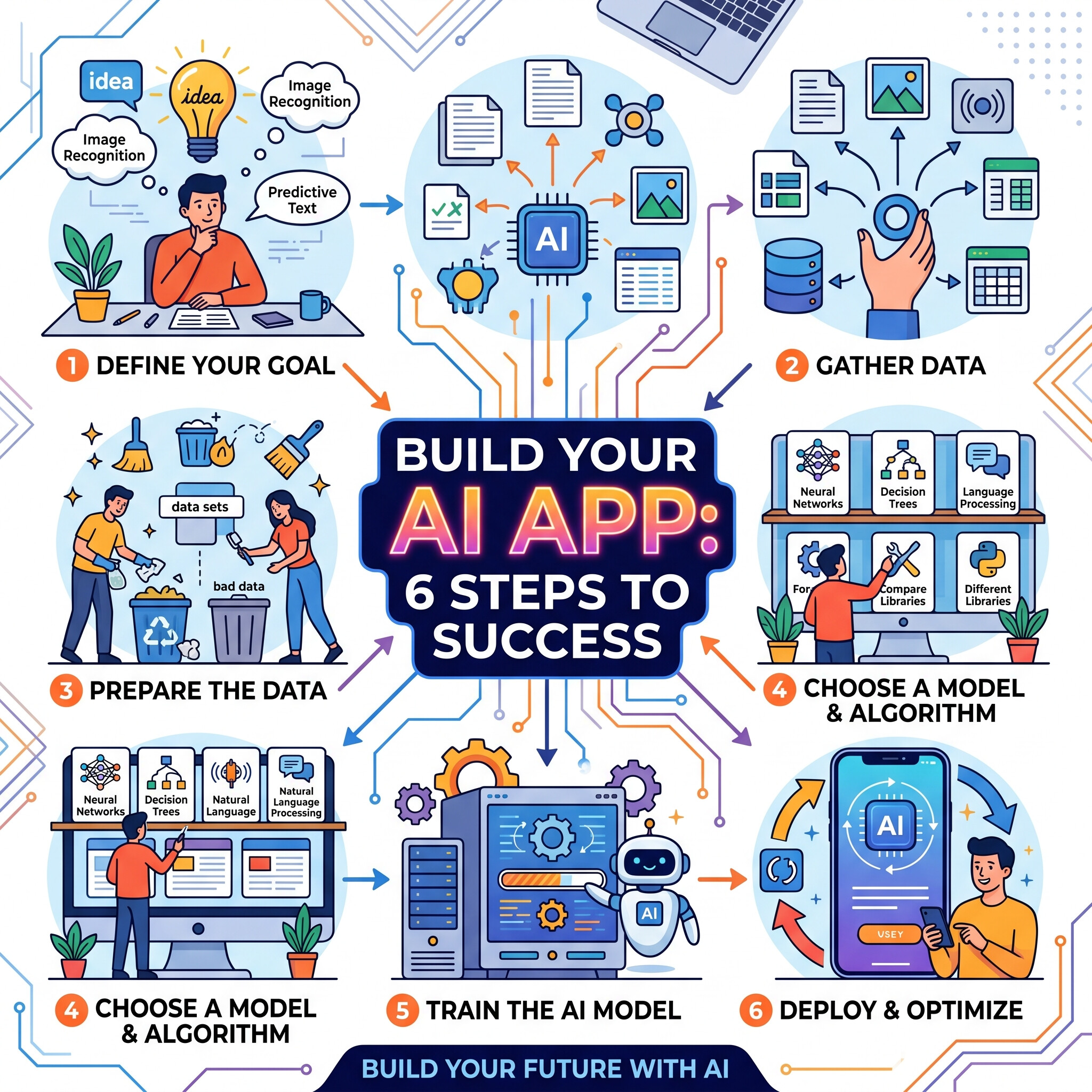
Helena Liu’s 6-Step Method for Building an AI App Without Coding
Helena’s approach is structured, practical, and designed for people who don’t have a tech background. Here’s a breakdown of how she teaches her students to go from idea to working app:
Step 1: Audit Your Current Workflows
Before you build anything, you need to understand what problem you’re solving. Helena always starts here. Look at your business or your daily work and ask:
- What tasks do I do over and over again?
- Where am I losing the most time?
- What problems do my customers keep asking me to solve?
Your AI app should solve a real, specific problem. The more clearly you can define it, the better your app will be — and the easier it will be to build.
Example: Maybe you spend two hours a week answering the same customer questions. An AI chatbot could handle that automatically.
Step 2: Identify the Bottlenecks and Repetitive Tasks
Once you’ve audited your workflows, circle the biggest pain points. These are your opportunities. Helena encourages her students to look for tasks that are:
- Repetitive (done the same way every time)
- Time-consuming (taking up hours you could use elsewhere)
- Rule-based (following a predictable pattern)
These are the tasks AI handles best. If it can be described in a clear set of steps, AI can automate or assist with it.
Step 3: Assess Which AI or Automation Tool Fits Best
Not every problem needs a full custom app. Sometimes a simple automation will do. Helena teaches her students to match the right tool to the right problem:
- Chatbots (ChatLemon, ManyChat, or Tidio): Great for answering FAQs, qualifying leads, or booking appointments.
- AI content tools (Whiteboards AI, ChatGPT, Jasper): Perfect for generating blog posts, emails, social media content, or product descriptions.
- Automation platforms (Make, Zapier): Ideal for connecting apps and automating workflows — like sending a follow-up email when someone fills out a form.
- No-code app builders (Replit Agent, Bubble, Glide): For building actual custom applications with a user interface.
Choose the tool that fits your specific use case, not the most advanced or impressive-sounding one.
Step 4: Design a Step-by-Step Plan for Your App
This is where your life experience becomes your superpower. You don’t need to understand the code — you need to understand the user experience. Ask yourself:
- Who will use this app?
- What will they do first when they open it?
- What outcome do they need to reach?
- What should the app say, ask, or produce?
Write this out as a simple flowchart or list of steps. Think of it like writing a recipe: what are the ingredients, and in what order do they come together?
Helena describes this as designing the “blueprint” before building — and it’s the step most beginners skip, then wonder why their app doesn’t work well.
Step 5: Build Your App Using AI Tools (No Coding Required)
Here’s where the magic happens. With your blueprint in hand, you can use tools like Replit Agent to describe what you want in plain English and let the AI generate the underlying code for you. You guide it, refine it, and test it — but you’re not writing the code yourself.
For chatbots, platforms like ChatLemon or ManyChat let you drag and drop conversation flows. For automation, Make or Zapier uses visual workflows that look more like a diagram than a program.
Helena’s key advice here: start small and test fast. Build the simplest version of your app first — what’s called a “Minimum Viable Product” (MVP). Get it working, get feedback, then improve it. Don’t wait until it’s perfect.
As she puts it: “Every successful step came from action, not overthinking.”
Step 6: Launch, Implement, and Iterate
Your app is ready — now it’s time to put it to work. Launch it to a small group first. Watch how people use it. Collect feedback. Then improve.
This is where Helena’s background in project management really shines. She teaches her students to treat their AI app like a living product — something that grows and improves over time as you learn more about how your customers use it.
The goal isn’t perfection on day one. The goal is progress.
Real Examples of What You Could Build
Still wondering what kind of AI app you could create? Here are some practical ideas tailored for online entrepreneurs over 50:
- A lead generation chatbot that qualifies visitors on your website and books calls with you automatically — so you wake up to appointments already on your calendar.
- An AI content assistant trained on your writing style that drafts blog posts, newsletters, or social media posts in your voice — cutting your content creation time by 80%.
- A customer onboarding tool that walks new clients through your process with automated messages, videos, and resources — without you lifting a finger.
- A niche knowledge app that lets users ask questions and get instant answers based on your expertise — turning your years of experience into a 24/7 AI advisor.
- An automated follow-up system that sends personalized messages to prospects based on their behavior — keeping your pipeline warm without manual effort.
Each of these is buildable today, using the tools and method Helena teaches.
The Mindset Shift That Makes Everything Possible
Here’s the most important thing Helena Liu teaches — and it has nothing to do with technology.
It’s the belief that you don’t have to be technical to build something powerful.
For too long, software and AI have been treated as the exclusive domain of young tech workers in Silicon Valley. That narrative is not just outdated — it’s wrong. The tools have changed. The playing field has levelled. And entrepreneurs with real-world experience, deep domain knowledge, and a genuine desire to help people are exactly the ones who build the best AI products.
You don’t need to learn to code. You need to learn to think like a problem-solver — which, if you’ve built any kind of business or career, you already are.
Helena started with nothing but determination and a willingness to learn. She built two businesses, helped thousands of people, and created AI software tools — all by focusing on the outcome, not the technical complexity.
You can do the same.
Where to Start: Your Next Steps
If this has lit a fire in you, here’s what to do next:
- Visit ProductCamps.com and sign up for Helena Liu’s free AI and automations training at productcamps.com/free. It’s the perfect starting point.
- Write down one problem in your business or life that you wish could be automated or made smarter. That’s your app idea.
- Pick one tool from the list above and spend 30 minutes exploring it this week. You don’t have to build anything yet — just get familiar.
- Come back and share your idea in the comments below. I’d love to hear what you’re thinking of building!
Final Thought: The Best Time to Start is Now
The AI revolution isn’t coming — it’s already here. And the entrepreneurs who thrive in the next decade won’t necessarily be the ones who understand AI the deepest. They’ll be the ones who took action while others were still waiting.
You have everything you need. The tools are accessible. The method is proven. The opportunity is real.
So take a page from Helena Liu’s book: don’t wait until you’re ready. Start now, learn as you go, and let your experience guide you.
Your AI app is closer than you think.
Have questions or want to share your AI app idea? Drop a comment below — I read every one!
And if you found this post helpful, share it with a fellow entrepreneur who’s ready to take the leap into AI.